Panasonic Lumix DMC-G1 Lähteet | NavigointivalikkoInfobox OKOverview and technical specificationsPanasonic Lumix DMC-G1 ReviewPanasonic Lumix DMC-G1 ReviewPanasonic Lumix DMC-G1 Review

Digitaaliset kameratPanasonic


PanasonicinMicro Four ThirdsFour ThirdskennonobjektiivitGH1GF1G2G10


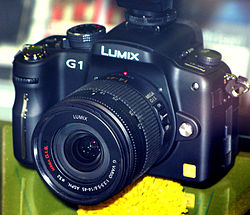
Panasonic Lumix DMC-G1
Lumix G1 IMG 2426.jpg
Tyyppi
järjestelmäkamera
Kenno
17,3 x 13,0 mm Live MOS
Korkein resoluutio

4000×3000 (12.0 megapikseliä)
Objektiivi
Micro Four Thirds
Suljin
tietokoneohjattu verhosuljin
Suljinajat
60–1/4000 sekuntia
Valotustavat
automaattinen, ajan esivalinta, aukon esivalinta, manuaali
Tarkennustavat
automaattinen, manuaalinen, jatkuva, kasvojen tunnistus
Sarjakuvaus
3 kuvaa sekunnissa
Etsin
elektroninen, 1.4 megapikseliä
ISO-arvot
100-3200
LCD-näyttö
3.0 tuumaa TFT LCD 460000 pikseliä
Tallennusmedia
SD/SDHC/MMC
Akku
1250 mAh 7.2v
Paino
385 g
Infobox OK

Panasonic Lumix DMC-G1 on Panasonicin valmistama ensimmäinen Micro Four Thirds -standardin mukainen järjestelmäkamera. Standardin uutuus oli vanhemmasta Four Thirds -standardista poiketen perinteisen optisen etsimen korvaaminen elektronisella, ja tämän mahdollistamana pienempi kennon ja objektiivin välinen etäisyys, mikä mahdollistaa kooltaan pienemmät objektiivit ja kamerat.


G1 esiteltiin photokina 2008 -näyttelyssä, ja sen myynti Euroopassa alkoi marraskuussa 2008. G1:stä seurasi video-ominaisuuksiltaan edistynyt GH1, sekä hyvin pienikokoinen GF1, joka elektronisen etsimen puuttumista ja video-ominaisuuksia lukuun ottamatta oli ominaisuuksiltaan vastaava.
Vuonna 2010 G1:tä seurasi videotallennukseen kykenevä G2 sekä edullisempi G10.


Lähteet |


Commons


Wikimedia Commonsissa on kuvia tai muita tiedostoja aiheesta Panasonic Lumix DMC-G1.


  • Overview and technical specifications – Panasonicin nettisivut


  • Panasonic Lumix DMC-G1 Review – Digital Camera Resource Page


  • Panasonic Lumix DMC-G1 Review – Digital Photography Review


  • Panasonic Lumix DMC-G1 Review – Imaging Resource


Popular posts from this blog

Are all passive ability checks floors for active ability checks?Does passive perception supersede active perception?Which skills can be used passively?Active Opposition with Free-Form Professions in Fate5E Trap/Ambush/Stealth Mechanics VS Passive Perception ConfusionInteraction between perception and stealth in obscured conditionsHow does Keen Sight affect Passive Perception?Are all d20 rolls either attacks, saves or ability checks?Can players declare that they are making a specific ability check?Can I see a Hidden creature that is not obscured at all?Can a Stealth check ever be made passively?Is this alternate version of the Observant feat balanced?What is the minimum amount of skill points per HD?

How do we improve the relationship with a client software team that performs poorly and is becoming less collaborative? Unicorn Meta Zoo #1: Why another podcast? Announcing the arrival of Valued Associate #679: Cesar ManaraDealing with clients who want more than what's in the contractHow to prepare for a client visit?How to handle undeservedly positive feedbackSupervisor apparently making it appear that our team underperformed and we indirectly caused client not to pay fullHow to progress my skills development as both the technical lead and youngest member on my team?Under performing employee will be fired if I ask for him off my teamwhat recommendations can I give to a colleague who is not preforming as well as expectedForcing usage of clients laptops because of VPN accessIs it acceptable to e-mail a client regarding potential opportunities in their company?Am I overly concerned about a newly hired Senior Developer with low performance?

Rank groups within a grouped sequence of TRUE/FALSE and NAGrouping functions (tapply, by, aggregate) and the *apply familyCharacters counting and subletting specific patternsWhat is the purpose of setting a key in data.table?data.table vs dplyr: can one do something well the other can't or does poorly?how to make a bar plot for a list of dataframes?How to group by unique values in a list in RPandas - Alternative to rank() function that gives unique ordinal ranks for a columnRank within group in for loop in RData transformation: from dyadic to observational data in RGetting map from purrr to work with paste0