Diasetyylidihydromorfiini Lähteet | Navigointivalikko509-71-75359460DB0145210.1016/j.ejphar.2004.03.050

Opioidit


Schedule IopiaattiSaksassaterminaalivaiheessasyövändiasetyylimorfiininkaksoissidosesteraasiendihydromorfiiniksimorfiiniksi
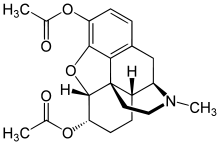


Diasetyylidihydromorfiini

Diasetyylidihydromorfiini


Systemaattinen (IUPAC) nimi
(5α,6α)-7,8-dihydro-4,5-epoksi- 17-methyylimorfinaani-3,6-diasetaatti

Tunnisteet

CAS-numero

509-71-7

ATC-koodi

ei ole

PubChem

5359460

DrugBank

DB01452

Kemialliset tiedot

Kaava

C21H25NO5 

Moolimassa
371,427 g/mol

Farmakokineettiset tiedot

Hyötyosuus
?

Metabolia

hepaattinen

Puoliintumisaika
?

Ekskreetio

renaalinen

Terapeuttiset näkökohdat

Raskauskategoria

?


Reseptiluokitus

Schedule I(US)


Riippuvuusalttius
Hyvin korkea

Antotapa

Intravenoosinen

Diasetyylidihydromorfiini (dihydroheroiini, asetyylimorfinoli, paralaudin) on voimakas puolisynteettinen opiaatti, joka kehitettiin Saksassa 1929. Sitä käytetään harvoin joissain maissa kovan kivun hoitoon, kuten terminaalivaiheessa olevan syövän kivunhoitoon. Se on diasetyylimorfiinin (eli heroiinin) vahvempi muoto. Sen aikaansaama kivunlievitys on voimakkaampaa ja kestää kauemmin kuin heroiinin: noin 4–7 tuntia.[1] Diasetyylidihydromorfiinissa 7,8-sidos on yksinkertainen, kun diasetyylimorfiinissa se on kaksoissidos.


Diasetyylidihydromorfiini metabolisoituu nopeasti plasman esteraasien vaikutuksesta dihydromorfiiniksi samaan tapaan kuin diasetyylimorfiini morfiiniksi.[2]


Lähteet |


  1. ↑ "Pharmacological characterization of dihydromorphine, 6-acetyldihydromorphine and dihydroheroin analgesia and their differentiation from morphine" (2004). European journal of pharmacology 492 (2–3): 123–30. doi:10.1016/j.ejphar.2004.03.050. PMID 15178355. 


  2. ↑ "A comparative study of physiological and subjective effects of heroin and morphine administered intravenously in postaddicts" (1961). The Journal of pharmacology and experimental therapeutics 133: 388–99. PMID 13767429. 


Popular posts from this blog

Are all passive ability checks floors for active ability checks?Does passive perception supersede active perception?Which skills can be used passively?Active Opposition with Free-Form Professions in Fate5E Trap/Ambush/Stealth Mechanics VS Passive Perception ConfusionInteraction between perception and stealth in obscured conditionsHow does Keen Sight affect Passive Perception?Are all d20 rolls either attacks, saves or ability checks?Can players declare that they are making a specific ability check?Can I see a Hidden creature that is not obscured at all?Can a Stealth check ever be made passively?Is this alternate version of the Observant feat balanced?What is the minimum amount of skill points per HD?

How do we improve the relationship with a client software team that performs poorly and is becoming less collaborative? Unicorn Meta Zoo #1: Why another podcast? Announcing the arrival of Valued Associate #679: Cesar ManaraDealing with clients who want more than what's in the contractHow to prepare for a client visit?How to handle undeservedly positive feedbackSupervisor apparently making it appear that our team underperformed and we indirectly caused client not to pay fullHow to progress my skills development as both the technical lead and youngest member on my team?Under performing employee will be fired if I ask for him off my teamwhat recommendations can I give to a colleague who is not preforming as well as expectedForcing usage of clients laptops because of VPN accessIs it acceptable to e-mail a client regarding potential opportunities in their company?Am I overly concerned about a newly hired Senior Developer with low performance?

Rank groups within a grouped sequence of TRUE/FALSE and NAGrouping functions (tapply, by, aggregate) and the *apply familyCharacters counting and subletting specific patternsWhat is the purpose of setting a key in data.table?data.table vs dplyr: can one do something well the other can't or does poorly?how to make a bar plot for a list of dataframes?How to group by unique values in a list in RPandas - Alternative to rank() function that gives unique ordinal ranks for a columnRank within group in for loop in RData transformation: from dyadic to observational data in RGetting map from purrr to work with paste0