Huascarán Katso myös | Lähteet | Navigointivalikkomuokkaamuokkaa wikitekstiäMount HuascaránYungay 1970-2009: remembering the tragedy of The EarthquakeHuascarán National Parklaajentamalla

Andien vuoretPerun vuoret


AndeihinvuoriPerussaCordillera BlancaEtelä-AmerikanAncashin maanjäristysYungaynHuascaránin kansallispuistopatikointivuorikiipeilyaluettaUnesconmaailmanperintöluetteloon
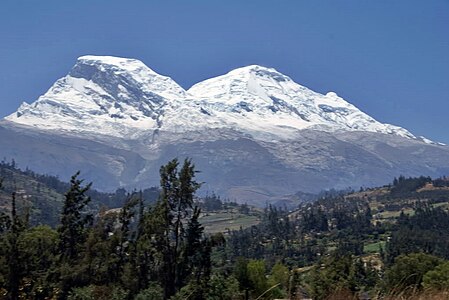


Huascarán

NevadoHuascaran.jpg


Sijainti

Peru
Vuoristo

Cordillera Blanca, Andit
Korkeus merenpinnasta

6 768 m
Prominenssi

2 776 mView and modify data on Wikidata
Suojelualue

Huascaránin kansallispuistoView and modify data on Wikidata
Ikä

PaleogeenikausiView and modify data on Wikidata
Ensimmäinen nousu huipulle

1932


Koordinaatit

9° 07′ E, 77° 36′ LView and modify data on Wikidata


Huascarán on Andeihin kuuluva vuori Perussa. Se sijaitsee läntisillä Andeilla Cordillera Blanca -vuoriketjussa. Huascarán korkein huippu on 6 768 metrissä. Se on Perun korkein[1] ja Etelä-Amerikan neljänneksi korkein vuori.


Ancashin maanjäristys aiheutti pohjoisrinteen merkittävän luhistumisen 31. toukokuuta 1970.[1] Kivestä ja jäästä muodostunut vyörymä, joka syöksyi alas rinnettä, oli noin 1,5 kilometriä pitkä ja vajaan kilometrin leveä. Noin viiden minuutin päästä se peitti Yungayn kaupungin alleen, minkä seurauksena kuoli suurin osa kaupungin 25 000 asukkaasta.[2]


Huascarán ympäristössä on Huascaránin kansallispuisto, joka on suosittua patikointi- ja vuorikiipeilyaluetta, ja joka kuuluu Unescon maailmanperintöluetteloon.[3]


Katso myös |


  • Luettelo maiden korkeimmista kohdista


Lähteet |


  1. ↑ ab Mount Huascarán Encyclopedia Britannica. Viitattu 19.6.2014.


  2. ↑ Yungay 1970-2009: remembering the tragedy of The Earthquake Peruvian Times. Viitattu 19.6.2014.


  3. ↑ Huascarán National Park Unesco. Viitattu 19.6.2014.


Tämä vuoriin, vuoristoihin tai muihin maankohoumiin liittyvä artikkeli on tynkä. Voit auttaa Wikipediaa laajentamalla artikkelia.


Popular posts from this blog

Are all passive ability checks floors for active ability checks?Does passive perception supersede active perception?Which skills can be used passively?Active Opposition with Free-Form Professions in Fate5E Trap/Ambush/Stealth Mechanics VS Passive Perception ConfusionInteraction between perception and stealth in obscured conditionsHow does Keen Sight affect Passive Perception?Are all d20 rolls either attacks, saves or ability checks?Can players declare that they are making a specific ability check?Can I see a Hidden creature that is not obscured at all?Can a Stealth check ever be made passively?Is this alternate version of the Observant feat balanced?What is the minimum amount of skill points per HD?

How do we improve the relationship with a client software team that performs poorly and is becoming less collaborative? Unicorn Meta Zoo #1: Why another podcast? Announcing the arrival of Valued Associate #679: Cesar ManaraDealing with clients who want more than what's in the contractHow to prepare for a client visit?How to handle undeservedly positive feedbackSupervisor apparently making it appear that our team underperformed and we indirectly caused client not to pay fullHow to progress my skills development as both the technical lead and youngest member on my team?Under performing employee will be fired if I ask for him off my teamwhat recommendations can I give to a colleague who is not preforming as well as expectedForcing usage of clients laptops because of VPN accessIs it acceptable to e-mail a client regarding potential opportunities in their company?Am I overly concerned about a newly hired Senior Developer with low performance?

Rank groups within a grouped sequence of TRUE/FALSE and NAGrouping functions (tapply, by, aggregate) and the *apply familyCharacters counting and subletting specific patternsWhat is the purpose of setting a key in data.table?data.table vs dplyr: can one do something well the other can't or does poorly?how to make a bar plot for a list of dataframes?How to group by unique values in a list in RPandas - Alternative to rank() function that gives unique ordinal ranks for a columnRank within group in for loop in RData transformation: from dyadic to observational data in RGetting map from purrr to work with paste0